2024/Built for Hock Cheong Transport Co
The rulebook that lived in one head, written down and running on its own.
80% fewer errors, 50% more efficient
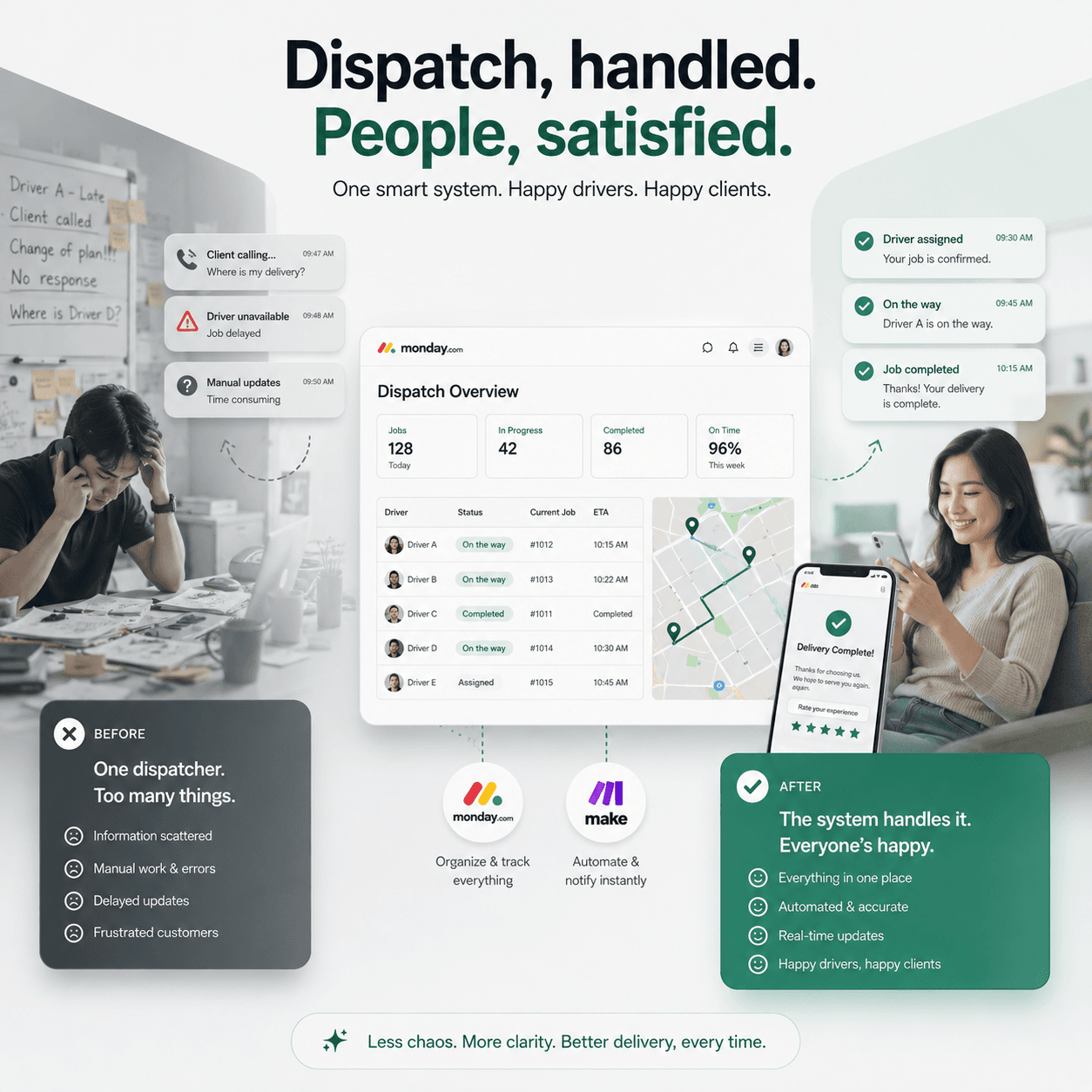
The dispatch rules lived in one admin's head. Which driver suits which client, what counts as urgent, who to phone when a job slips. It worked beautifully right up until she took leave. I sat with her, wrote the rulebook down, and built the system that now runs it.
How it works
Every logistics company has someone like this: the person who knows that this client always wants a call first, that this driver is better on the coastal route, that a delay on Friday afternoon is a different problem from a delay on Tuesday. None of it is written down anywhere. The business runs on it and nobody notices until that person is unavailable. The work was mostly listening, then translating what I heard into rules a system could follow. It sits on Monday.com with Make and Google Apps Script underneath, and it now handles driver assignment, client notification and job tracking without anyone intervening in the ordinary cases. The exceptions still go to a human, which is the point.
Built with
Smart Dispatch — Project Overview
From one dispatcher's memory
to a system the whole team can run
How an unwritten dispatch rulebook — routing logic, priorities, exceptions — got encoded into a system that runs without a single point of failure.
One dispatcher. Every job routes through them.
Driver availability, client priorities, route logic — all of it lived in one experienced admin's head. Every assignment meant a phone call, and every day off meant risk.
The rulebook runs itself.
Routing logic, priority rules, and exception handling now live in the system, not in one person's head. Drivers get jobs automatically. Clients get updates automatically.